
Tire & Rubber Marking Systems
It is crucial that tire manufacturers track every component used in a finished tire. Each tire is built is made from multiple rubber compounds and components designed for a specific size and performance requirement. If a component cannot be identified, the result can be scrap, rework, production delays, quality issues, or a finished tire that does not meet safety or performance standards. Accurate identification and traceability help manufacturers verify materials, automate production, quickly determine affected products, and support recalls.
Rubber Mix
Rubber compound must be identified to ensure the correct recipe is used throughout the manufacturing process. Even a single tire may contain multiple compounds, each created for a specific function. Things like traction, durability, heat resistance, or flexibility. If a compound is mislabeled or loses ID, manufacturers will have no way to verify its specifications leading to it being scrapped.
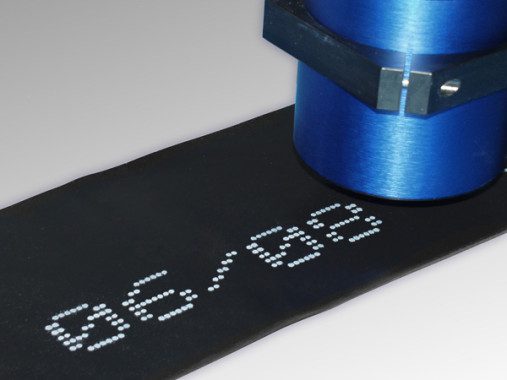
Batch number, date, shift, weight, compound number, 2D codes, time, barcodes, and size are all options of what is marked on rubber as it is extruded.
Tire Components
Tire components including tread, sidewall, and inner liner, are custom to each tire. These components are made from a specific type of rubber compound, and they each have have their own unique characteristics. Therefore identification of each component is vital in the tire building and molding process in order to ensure they are assembled in the correct sequence and orientation.
Finished Tires
After curing, finished tires still need identification for quality and shipment to assembly plants. Tire markings allow manufacturers to organize the products, verify specifications, and ensure the correct tire reaches the correct customer or vehicle plant.
- Sequencing: Applying sequential numbers so tires arrive at an OEM assembly line in their build order.
- OEM Striping: Applying colored stripes that quickly identify tire specifications or production requirements.
- Center Line Striping: Marking the center of the tread to assist with alignment, inspection, balancing, or downstream handling.