
tags and labels – Tagging is everywhere
In modern manufacturing and construction, tagging and labeling products and equipment is a near-universal requirement. Every piece of material, part, and product is expected to be traceable from start to finish.

Importance of Labeling
Identification is not optional. In industrial operations, a misplaced or unreadable tag can halt production, cause costly mix-ups, or compromise worker safety. Tags are carriers of critical information like what a product is, where it came from, and where it must go.
Tags and labels play multiple roles throughout every industry vertical:
-
Operational accuracy: Prevents material and part mix-ups, reducing shipping errors and scrap/rework.
-
Workflow continuity: Ensures that products flow smoothly through multiple production processes and quality control checkpoints.
-
Safety: Communicates hazards, handling and usage requirements, and safety inspection status.
In regulated industries such as energy production or aerospace manufacturing, proper labeling is essential to meet strict identification requirements. Tags become part of the permanent product record, ensuring that components can be traced back to specific suppliers and lots even years later.

Automated Data and industry 4.0
In the Industry 4.0 era, tagging is the bridge between the physical and digital worlds. The Internet of Things (IoT) depends on every physical item carrying data that can be captured automatically, eliminating manual data entry and reducing the possibility of human error. Tags, labels, and direct part marks ensure accurate and timely information flows between the plant floor, warehouse, logistics operations, and enterprise software systems.
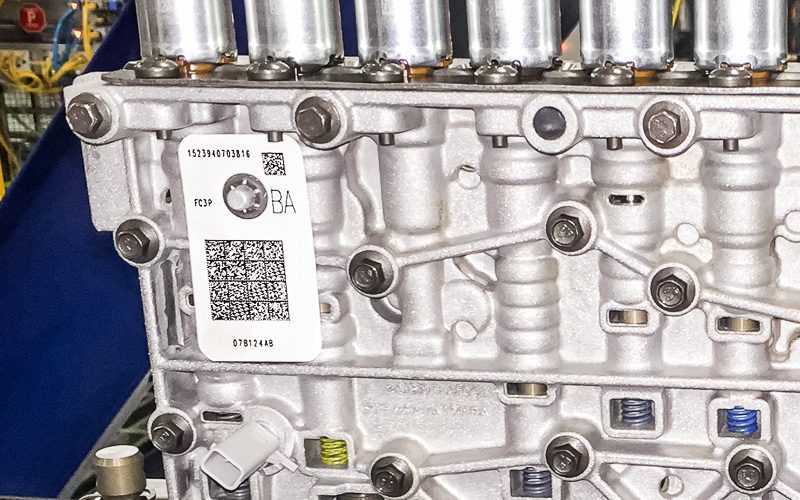
Automation can be deployed using a range of identification technologies like linear barcodes, 2D Data Matrix codes, and RFID, all of which enable equipment and software to interpret information without manual intervention.
How tagging supports Industry 4.0 workflows:
-
Machine-readable codes allow scanners to automatically feed status updates and production events back into ERP and MES systems.
-
RFID and sensor-enabled tags enable hands-free identification and can integrate directly into IoT networks for tracking movement, temperature, and other environmental conditions.
-
Real-time data capture provides full visibility across the supply chain, supporting predictive maintenance, just-in-time manufacturing, and optimized inventory planning.
For example, a steel coil arriving at a plant can be scanned at receiving, instantly updating inventory and triggering the correct downstream production schedule.
Benefits
-
Elimination of errors: Automatic data capture reduces manual keying mistakes and ensures accurate records.
-
Faster, more reliable production: Streamlined tracking enables smoother workflows and reduces downtime.
-
Improved traceability and compliance: Tagged products maintain a continuous and verifiable history, supporting quality control, and compliance checks


Choosing the right code format often depends on industry standards, the volume of data, and the scanning environment. Organizations may even adopt a hybrid approach. For example, RFID might be used in a fully automated warehouse for pallet-level tracking, while printed barcodes remain the standard for individual parts and shipping labels. This layered system provides both cost efficiency and high reliability.
-
RFID Advantages:
-
No line of sight required: tags can be read even when dirty, hidden, or inaccessible.
-
Multiple tags can be read simultaneously, speeding up inventory checks.
-
Can integrate with IoT systems for automated tracking in real time.
-
-
RFID Limitations:
-
Requires investment in readers and infrastructure.
-
Metal and liquid environments can interfere with performance.
-
Tags are more expensive than printed barcodes.
-
-
Printed Barcodes and QR Codes Advantages:
-
Low-cost, easy to implement, and universally compatible.
-
Can be scanned with handheld or fixed-position readers
-
Effective in nearly every industrial environment with a proper substrate and printing method.
-
Purposes of Tagging — What Do People Tag?
Industrial tagging serves many purposes across the material and product lifecycle. A single facility may use different types of tags for raw material intake, work-in-progress (WIP) tracking, finished product identification, and shipping. The challenge lies in designing a tagging program that meets the durability, compliance, and workflow needs of each stage.
Inventory / Raw Material Management
Every production process begins with materials. From metal coils to plastic pellets to lumber bundles, raw inputs must be labeled to prevent costly mix-ups. Incorrectly identified materials can lead to production delays, rework, or quality issues that ripple through an entire operation.
Key functions of raw material tagging include:
-
Identifying grade, size, or alloy for metals.
-
Tracking lot numbers and supplier data for traceability.
-
Supporting first-in/first-out (FIFO) or just-in-time inventory systems.
-
Preventing mix-ups between similar-looking materials.
A simple barcode tag can ensure that the correct steel coil is released to production or that the right batch of resin pellets is dried, molded, and tracked through manufacturing.
Product Tracking in Production
Work-in-progress (WIP) tracking is often the most challenging tagging environment. Products move through multiple processes that can damage or destroy conventional labels, but traceability must be maintained at every step.
Examples of difficult processes that tags must survive include:
-
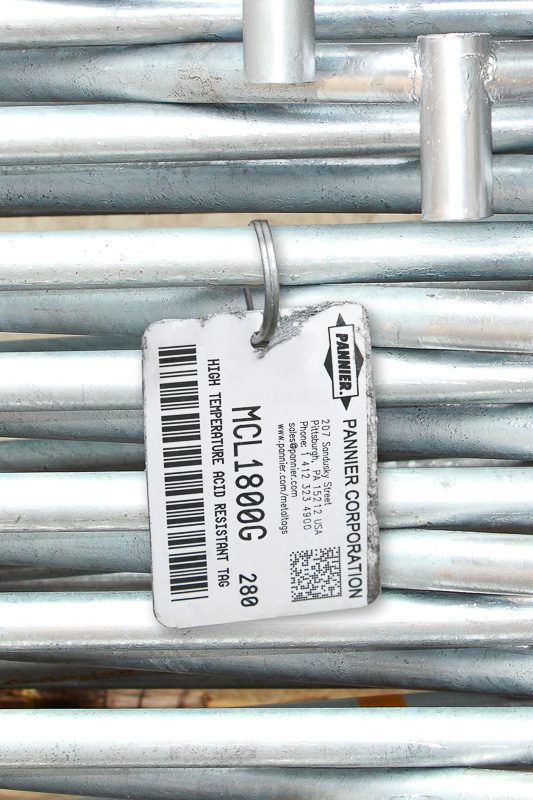
Heat treatment & furnaces: requiring metal tags that withstand high temperatures.
-
Acid cleaning & chemical baths: demanding chemically resistant materials.
-
Abrasive blasting: where tags need to resist mechanical wear.
-
Painting, galvanizing, and powder coating: which coat surfaces and can obscure codes unless tags are specifically designed for immersion or coating lines.
Metal tags that are embossed, stamped, or laser-marked are often the only reliable option for these environments. They remain legible after exposure and maintain traceability from start to finish.
Finished Product Labeling
Once products leave the production line, they require permanent identification. Finished product labeling is critical not only for logistics but also for compliance, safety, and customer requirements.
Finished product labels may need to:
-
Display certification marks (UL, CE, ISO).
-
Provide product specifications or instructions.
-
Include safety warnings or hazard information.
-
Withstand long-term environmental exposure, including UV, weather, and temperature extremes.
Adhesive-backed labels are common for finished goods, with adhesives chosen for either permanent bonding (nameplates, compliance labels) or clean removal (temporary handling or protective labels). The durability of inks, ribbons, or laser etching ensures that labels remain legible throughout the product’s service life.
Shipping Tags
Transportation environments introduce unique stresses: vibration, impact, moisture, and sunlight. A shipping label or tag must remain readable from the loading dock to final delivery.
Shipping tags often require:
-
Tear-resistant substrates (plastic, heavy paperboard, or laminated stock).
-
UV-resistant inks that prevent fading during long outdoor storage.
-
Strong adhesives or reinforced hang holes for rough handling.
For example, a structural steel beam might spend weeks outdoors in a yard before delivery. A shipping tag that fails could result in lost traceability, shipping delays, or misapplied inventory.
Facility Maintenance & Asset Tagging
Tagging does not stop at the production floor. Facilities use tags to manage equipment, tools, and infrastructure, ensuring that every asset is tracked and maintained properly.
Examples of asset tagging applications include:
-
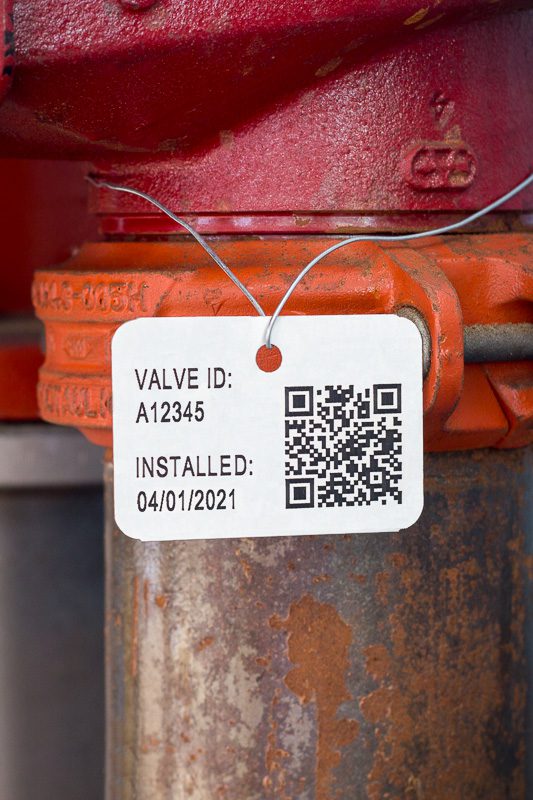
Valves, pumps, and motors tagged with QR codes linking to maintenance manuals.
-
Tools and machines labeled for calibration schedules.
-
Safety equipment tagged for inspection intervals.
QR-coded maintenance tags are particularly valuable, as they connect physical assets to CMMS systems. A technician can scan a code in the field and immediately access service history, parts lists, or digital work orders, improving efficiency and reducing errors.
Facility Construction
On construction projects, thousands of parts must be matched to detailed drawings. Tags ensure that each component, from rebar cages to prefabricated panels, is placed correctly.
Key benefits of construction tagging:
- Reduces costly errors caused by misidentified components.
- Speeds up installation by making parts easier to locate.
- Supports inspection and handover processes with clear traceability.
Without reliable tagging, crews may waste hours determining part placement, and mistakes can result in structural issues or rework.
Infrastructure and Large Installations
Tagging plays an equally important role in large-scale installations such as warehouses, solar arrays, and transmission towers. These environments demand durable identification that remains legible for decades, often outdoors and exposed to the elements.
Use cases include:
- Warehouse systems: Rack locations tagged for automated inventory management.
- Solar panel arrays: Components tagged for installation alignment and long-term maintenance.
- Transmission towers: Structural elements tagged for inspection, compliance, and repair tracking.
Durable metal tags are often used here, ensuring that even decades later, inspectors and service teams can confirm part numbers and specifications.
Choosing the Right tag
Choosing the right tagging method depends on the application environment and operational needs. A systematic approach ensures that tags perform reliably without adding unnecessary cost.

Types of Tags & Labels
Tags and labels come in many forms, each designed for specific environments and requirements. The choice of material, attachment method, and marking process depends on how the tag will be used and what it must survive.
Tag vs. Plate vs. Label
While the terms are often used interchangeably, there are practical distinctions:
-
Tags: Flexible identifiers, often made of plastic or metal, attached with wire, string, or fasteners. Best for items that move through production or require temporary visibility.
-
Plates: Rigid markers, usually metal, designed to be riveted, bolted, or welded to a surface. Used when information must remain with an asset permanently.
-
Labels: Adhesive-backed markers applied directly to a surface. Available in paper, plastic, or specialty substrates depending on durability needs.
Each serves a different role in industrial identification. For example, a steel beam might carry a hang tag during production, a permanent plate when installed in a structure, and a shipping label for distribution.
Tag Material Comparison
| Type | Durability | Barcode Capable | Max Temp Resistance | Indoor Use | Outdoor Use | Lifecycle |
| Paper | Low | ■ | ■ | Temporary ID, inventory control, short-term labeling | ||
| Plastic | Medium | ■ | 1100°F | ■ | ■ | Work-in-progress tracking, shipping tags, general industrial use |
| Metal | High | ■ | 1800°F | ■ | ■ | Harsh process tracking, permanent identification, ____________ |
Attachment Methods
The method used to attach a tag or label plays a critical role in ensuring that identification remains with the product throughout manufacturing and handling. No single approach fits every situation; the appropriate method depends on the condition of the surface, the environment the material will encounter, and whether the identification needs to remain permanently with the part or only through a specific stage of production.
Adhesive-Backed Labels
Adhesive labels are commonly used when surfaces are smooth, clean, and relatively uniform. These labels rely on pressure-sensitive adhesive to create a consistent bond.
Adhesive-backed labels often require:
-
Adhesive formulations matched to the surface material (metal, plastic, painted finishes).
-
Resistance to abrasion, moisture, and handling during manufacturing.
-
Optional laminates or topcoats to protect printed information.
For example, cut parts moving between machining and assembly may only require short-term identification. A permanent adhesive-backed label ensures traceability throughout processing without additional hardware or tools.
Hang Tags
In situations where surfaces may be oily, rough, or uneven, hang tags provide reliable identification without relying on adhesion. These tags are attached using wire, ties, strapping, or clips.
Hang tags often require:
-
Durable substrates that resist tearing and abrasion.
-
Reinforced holes or grommets to withstand handling.
-
Compatibility with outdoor or yard storage conditions.
For example, a coil stored outdoors may accumulate oil, dirt, or rust that would prevent a label from sticking. A hang tag secured to the strapping ensures the coil can still be scanned and tracked as it moves through the facility.
Riveted or Fastened Plates
Mechanical fastening is used when identification must remain with the product for the long term, including during transport, installation, or end-use.
Riveted plates often require:
-
Metal or high-strength composite plates that resist wear and corrosion.
-
Clear, permanent marking such as embossed characters, engraving, or laser marking.
-
Compatibility with field conditions, including vibration and exposure.
For example, a fabricated assembly shipped to a construction site may require permanent part numbering to support installation. A riveted nameplate ensures that the identification remains intact even after coating, weather exposure, or rough handling.
Welded Nameplates
Welding offers the highest durability and is used when the identification must survive extreme environments, long service life, or harsh mechanical wear.
Welded nameplates often require:
-
Heat-resistant metals such as stainless steel.
-
Direct marking processes that remain legible after welding.
-
Precise placement to avoid interfering with structural or functional surfaces.
For example, equipment used in high-temperature industrial processes may undergo sandblasting, heat cycling, or chemical exposure. A welded nameplate ensures identification remains permanently legible for safety, traceability, and regulatory compliance.


Marking Methods for Metal Tags
Different marking methods offer varying levels of permanence, legibility, and compatibility with production workflows.
Stamping
Stamped tags are commonly used when:
-
Identification must remain readable even after abrasion, impact, or weathering.
-
The tag may be exposed to harsh processing steps such as galvanizing, painting, or shot blasting.
-
A straightforward alphanumeric code is sufficient for tracking.
Embossing
Embossed tags are typically selected when:
-
Visibility from a distance is important.
-
The tag may be exposed to coatings or surface buildup.
-
The identification needs to be read in low-light or fast-moving production environments.
Laser Marking or Laser Printing
Laser-marked tags are well-suited for:
-
Applications requiring machine-readable codes, including Data Matrix or QR codes.
-
Environments where traceability data must be stored in compact formats.
-
Workflows integrated with MES/ERP systems and automated scanning.
Printing Options for Plastic Tags
The method used to print information on the tag affects how well the text or code will withstand handling, UV light, and environmental conditions. Two primary printing technologies are used for plastic tag materials: thermal transfer and direct thermal printing.
Thermal Transfer Printing
Thermal transfer printing applies ink to the tag using a heat-sensitive ribbon. As the printhead heats selected points along the ribbon, the ink transfers onto the plastic surface, forming the printed characters or barcodes. This method produces sharp, high-contrast images suitable for both human-readable text and machine-scannable codes.
Thermal transfer printing is typically selected when:
-
Long-term readability is required.
-
The tag will be stored outdoors or exposed to sunlight.
-
Barcodes or 2D codes must remain stable over time.
-
The printed information may need to withstand abrasion or handling.
Direct Thermal Printing
Direct thermal printing does not use a ribbon or ink. Instead, the printhead applies heat directly to the tag material, which has a heat-reactive coating that darkens to form the printed characters. This makes direct thermal printing a simpler process with fewer consumables and lower initial cost.
Direct thermal printing is generally used when:
-
Identification is needed for a short duration.
-
The tags will not be exposed to prolonged sunlight or high heat.
-
The information is temporary, such as during internal routing or staging.
-
Cost efficiency and ease of use are priorities.